
Table of Contents
What Is Visual Storytelling?
By definition, visual storytelling is a story told through a visual medium. This can include anything from photography, video or illustration, which is then enhanced by the use of music, sound or audio.
When considering the very beginning of cinematic history, visual storytelling was all that filmmakers were limited to. Until the introduction of audio within film, all cinema-makers could do was show and not tell. The very fact that film began solely as a visual art suggests just how important visual storytelling should be within screenwriting.
The goal of visual storytelling is to convey complex thoughts and emotions without the use of much dialogue. Many filmmakers believe that some of the best scenes ever written follow this rule. To get a better sense of this idea, let’s take a look at the following two examples…
Within both of these scenes, Benny walks into a bakery and sees his ex-girlfriend working behind the counter.
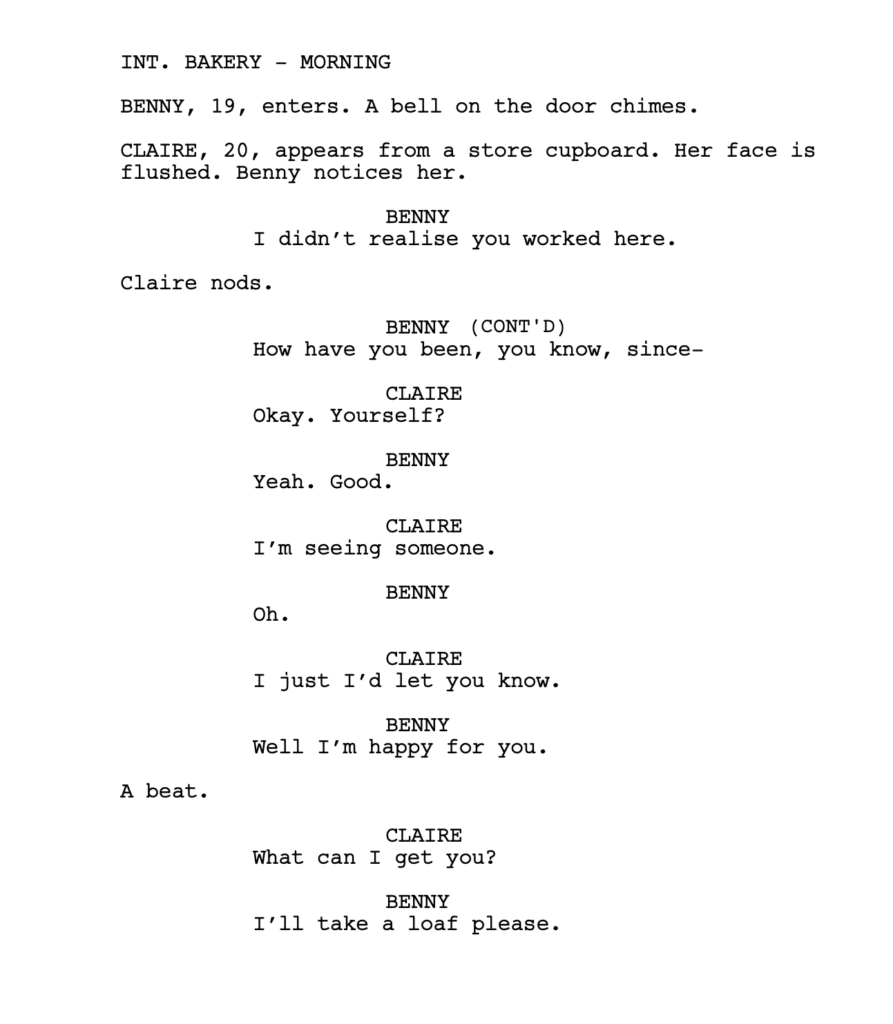
In this example, Claire announces she is seeing someone else. While this may be a completely realistic scenario, consider how the version below compares…
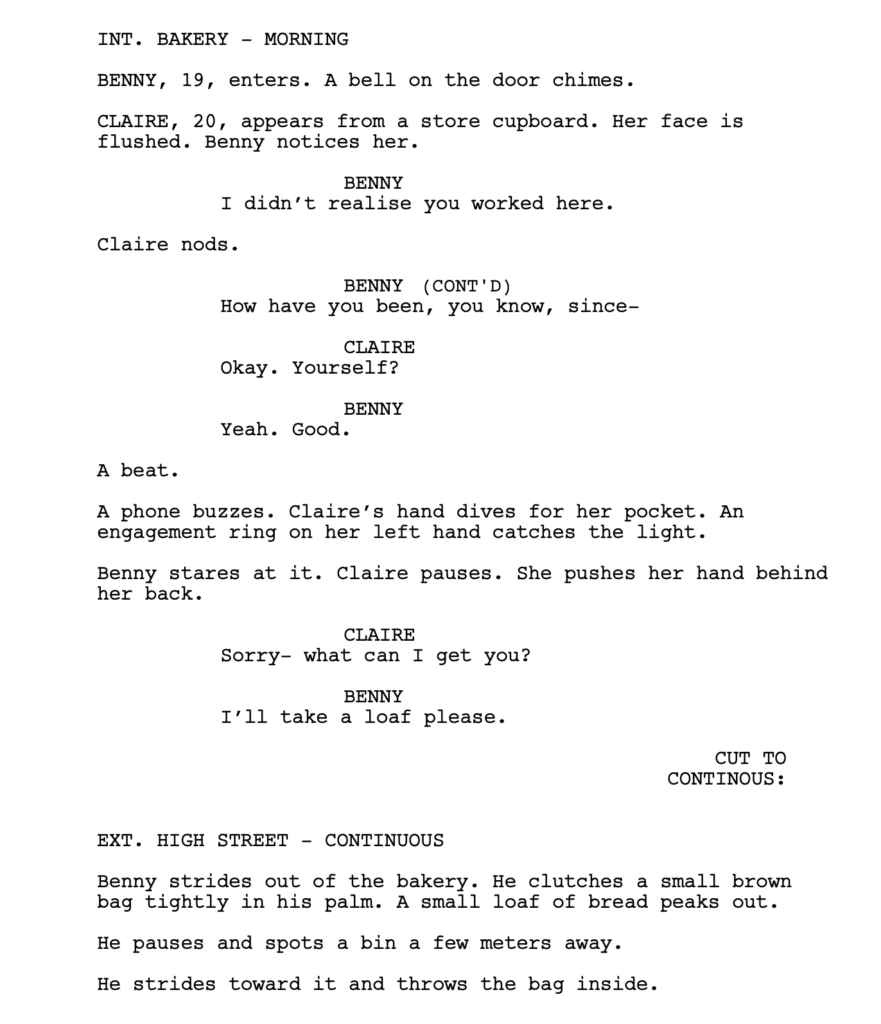
Now Consider, Which Scene Would Be More Engaging For An Audience to Watch?
Not only is it more interesting to visually see that Claire has moved on, but Benny’s reaction when he leaves the store creates a more engaging hook for an audience. Why would Benny throw the bread away? Did he know Claire worked there all along? Had he gone in to speak to her?
This may not be the most exciting of scenes either way. But the key point here is that while dialogue can create engaging moments onscreen, what many screenwriters tend to forget is that film is a visual medium. Dialogue can say a lot about a character, but so can what an audience sees.
To apply this concept, writers must consider the vital lesson of ‘show don’t tell‘. For decades, filmmakers have made some of the greatest films in the world without a single word of dialogue.
Still not convinced? Consider the very concept of a silent film. For years, this was all filmmakers were limited to but still to this day, people watch and enjoy silent films. It is fair to say this isn’t necessarily an acquired taste either- as seen with the box office success of A Quiet Place.
Members only
This article continues in our Members Area
Join SCREENWRITING: EVOLVED for full access to 700+ guides, whitepapers, the script library, industry interviews and much more.
Join SCREENWRITING: EVOLVED — just $9.99/monthCancel any time · No commitment
Not ready to join yet?
Comments are closed.