

An essential principle not only to screenwriting but also the wider fundamentals of storytelling, plants and payoffs are one of the most effective ways of involving the audience and embedding clever twists, turns, and surprises throughout your screenplay.
Premised upon the notion that any element introduced into a script must later prove significant, plants and payoffs exploit the human tendency to make mistakes, overlook details, and misconstrue information. In doing so, they also succeed in tapping into our desire to prove ourselves right and make logical connections.
In short – if you are going to draw attention to something, make it matter. The concept works to endow even the smallest details of your film with greater purpose, encouraging the audience to pay attention and make connections.
For such a simple concept, plants and payoffs have unrivalled implications for a screenplay’s success. So let’s take a look at exactly what they mean and how to implement them in your own screenplay.
Table of Contents
What Are Plants and Payoffs?
Plants and payoffs are all about planting seeds for the audience. Seeds that will eventually have sprouted into a meaningful idea or concept.
Plants are kind of like hidden pointers for the audience, subtle hints that allow us to make assumptions about forthcoming events or clues to look back on when they later emerge as crucial to the plot.
Whether it be a line of dialogue, an object, a character trait, or an action, a plant is any element that will later be returned to.
Any detail introduced into a script must have wider implications for the plot or its characters. If a writer can effectively implement plants and payoffs, details introduced at the beginning of a film/scene will later have garnered greater significance and changed meaning in some way.
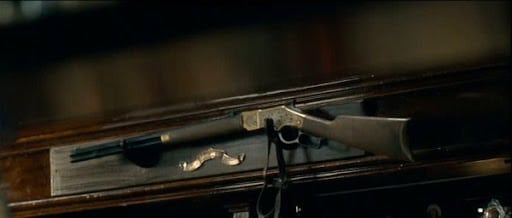
This is similar to Chekhov’s gun. This concept emerges from Anton Chekhov’s dramatic principle that every element introduced into a story must be necessary.
“If in the first act you have hung a pistol on the wall, then in the following one it should be fired. Otherwise don’t put it there.”
Anton Chekhov
In addition, plants and payoffs are similar to foreshadowing. However, typically they are more essentially tied up with the story than a moment of foreshadowing will be. Foreshadowing can seed something thematically into the story. Plants and payoffs, meanwhile, are more to do with the balance of the story overall.
Members only
This article continues in our Members Area
Join SCREENWRITING: EVOLVED for full access to 700+ guides, whitepapers, the script library, industry interviews and much more.
Level up your screenwriting for $9.99 a monthCancel any time · No commitment
Not ready to join yet?
Comments are closed.