

What is a Deus ex machina? It sounds like something technological and complex. But it’s actually quite simple.
Well, have you ever just been watching a film totally invested, your anticipation at an all-time high waiting for the ending? The movie has been good, and you cannot imagine anything taking away from it.
So, as the end approaches it becomes clear all hope is gone. Nothing will be able to save the characters in the film from certain death or their world from complete turmoil. The walls are closing in but suddenly out of nowhere by some miracle or ridiculously improbable stroke of luck the characters are saved.
After seeing this you walk out of the theater completely gobsmacked and you wonder what you just watched. You ask yourself ‘why did the writers even bother if the ending was going to be completely incompatible with the rest of the story?’
Many movies, unfortunately, end like this, employing the plot device known as a ‘Deus ex machina’. But can a Deus ex machina ever be useful and/or convincing in a screenplay? And how do you avoid using one? We take a look…
Table of Contents
What is a Deus Ex Machina?
Origin
The term Deus ex machina originated from the practice in ancient Greek plays. At the end of the play an actor playing a god would be lowered onto the stage by a crane or type of machine. Then that god would save the day in the story.
Deus ex machina: “god from the machine”
One of the most popular examples of a Deus ex machina in Greek plays is in Medea by Euripides. In the play, after Medea has killed her and her husband Jason’s children, she is whisked away by the Sun god.
Having a god descend from the heavens and save the day soon became a popular practice in Greek playwriting. It became popular because bringing in a god to save the day helped bolster the moral message being delivered by the play.
In Modern Cinema
In modern screenwriting, a Deus ex machina is employed when you have created situations for your characters that are nearly impossible to get out of. This happens because of how the script is set up. Sometimes this is by accident and other times it is purposeful. Nonetheless, getting your characters out of trouble seems unlikely.
So, a Deus ex machina in modern writing is used to fix these situations. Unfortunately, it is almost always abrupt and something that takes away from the script more than it adds to it.
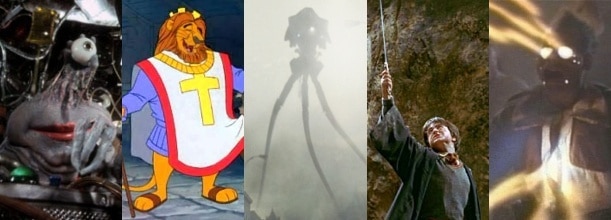
Additionally, a Deus ex machina can also be used to surprise the audience as a form of a plot twist. Whilst it can also act as a comedic device.
Furthermore, the “god” does not have to be a physical being. It can be an object, an unexpected ability, or a random event. It is something that has no previous setup but is thrown in to avoid a negative ending and provide a resolution.
Members only
This article continues in our Members Area
Join SCREENWRITING: EVOLVED for full access to 700+ guides, whitepapers, the script library, industry interviews and much more.
Join SCREENWRITING: EVOLVED — just $9.99/monthCancel any time · No commitment
Not ready to join yet?
Comments are closed.